
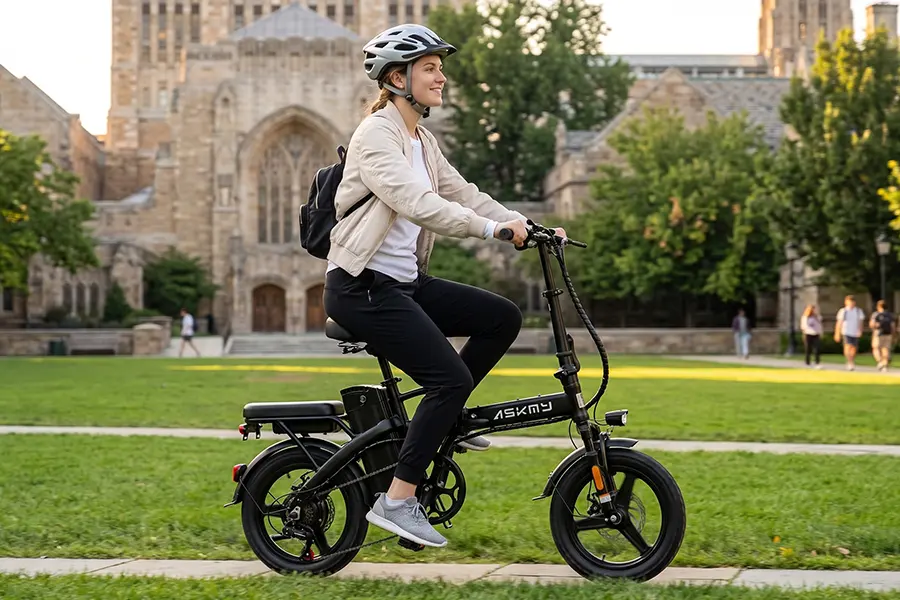
College life moves fast, and getting from the dorm to the lecture hall to the library requires reliable transportation. An ebike for college students is one of the smartest investments a student can make. It is faster than walking, cheaper than a car, easier to store than a traditional bike, and eliminates parking headaches on crowded campuses.
Finding a cheap electric bike for students that does not sacrifice quality or safety requires knowing what to look for. This guide covers the essential features, budget considerations, and practical tips for choosing the right e-bike for college life.
1. Why an E-Bike is Perfect for College
Before diving into specific recommendations, it is worth understanding why e-bikes are uniquely suited to the college environment:
Speed and Convenience
Most college campuses span several acres, and classes can be scheduled back-to-back in buildings on opposite sides of campus. An e-bike cuts travel time between classes to minutes, giving you more time to study, eat, or simply relax. With pedal assist, you can cover 2-3 miles in under 10 minutes without breaking a sweat — no need to arrive at class exhausted and sweaty.
No Parking Costs or Hassle
Car parking permits at universities often cost $200-$800 per semester, and finding a spot is a daily frustration. E-bikes eliminate this entirely. Most campuses have bike racks near every building, and many allow foldable e-bikes to be brought inside dorm rooms and classrooms.
📊 Campus Transportation Data
According to the American Campus Communities 2024 survey, the average college student spends $800-$1,500 per semester on transportation, including parking fees ($200-$800), gas ($300-$600), and maintenance. E-bike commuters spend an average of $50-$100 per year on electricity and basic maintenance. A study by the University of California found that students who switched to e-bikes saved an average of $1,200 annually while reducing their commute time by 45% compared to walking.
| Transportation Mode | Cost per Semester | 4-Year Total Cost |
|---|---|---|
| Car | $2,000+ | $16,000+ |
| Public Transit | $400-600 | $3,200-4,800 |
| E-Bike | $50-100 | $400-800 |
Low Operating Costs
The cost to charge an e-bike battery is roughly $0.05-$0.15 per full charge. Compare that to gas, insurance, maintenance, and parking for a car, and the savings are enormous. For a full cost comparison, the financial advantage of e-bikes over cars is clear.
Exercise Without the Sweat
Pedal assist means you get exercise on the way to class without arriving drenched in sweat. It is the perfect balance of physical activity and practical commuting.
2. What to Look for in a College E-Bike
When shopping for a cheap electric bike for students, prioritize these features to get the best value for your money:
Budget and Price Range
For college students, the sweet spot is typically $500-$1,200. In this range, you can find reliable e-bikes with decent motors, adequate battery life, and durable construction. Avoid the temptation to buy the cheapest option available, as very low-cost e-bikes often have unreliable components that fail quickly.
💰 Cost Comparison Data
A 2024 study by the National Center for Education Statistics found that the average college student pays $1,200-$2,400 per year for public transportation passes. In contrast, a $500-$1,200 foldable e-bike (like the REOCRO RE0-14 at $199) pays for itself within 2-4 months of saved transportation costs. The study also found that 68% of students with e-bikes reported improved time management due to faster campus commutes.
Weight and Portability
You will likely need to carry your e-bike up stairs, into elevators, or into classrooms. Weight matters. A foldable e-bike in the 35-45 pound range is manageable for most students. A REOCRO foldable e-bike is designed with portability in mind, making it easy to carry and store in dorm rooms.
Battery Range
For campus commuting, you do not need an enormous battery. A range of 20-35 miles per charge is typically sufficient for a full day of classes and errands. This keeps the bike lighter and more affordable while still covering all your needs.
Durability
College life is hard on belongings. Look for an e-bike with a sturdy frame, puncture-resistant tires, and reliable brakes. An e-bike that can handle rough use and occasional neglect will serve you better long-term.
Security Features
Bike theft on college campuses is rampant. Look for e-bikes with built-in locks or security features. Always invest in a quality U-lock or folding lock. For more on this, see our guide to e-bike safety accessories.
3. Best E-Bike Features for Campus Life
Beyond the basics, certain features make an e-bike particularly well-suited for college students:
- Foldable design: A foldable e-bike can be stored under a desk, in a dorm closet, or in a small apartment. This is one of the most valuable features for students living in shared spaces. See our foldable e-bike storage ideas for creative solutions.
- Removable battery: Allows you to charge the battery at your desk or in your dorm while leaving the bike in a common area.
- Integrated lights: Built-in front and rear lights mean you do not need to buy or remember separate lights for night riding.
- Multiple speed modes: Eco mode for flat campus paths, normal mode for moderate hills, and sport mode for rushing to class.
- Throttle option: A throttle lets you move without pedaling, useful when you are running late or carrying heavy textbooks.
4. Tips for College E-Bike Ownership
Owning an e-bike on campus comes with unique challenges. Here is how to handle them:
- Register your bike. Many campus police departments offer free bike registration that helps recover stolen bikes. Do this immediately after purchase.
- Learn proper folding technique. Knowing how to fold your ebike properly protects the mechanism and makes storage easier.
- Maintain your bike regularly. Check tire pressure weekly, keep the chain clean, and bring the bike for a tune-up once a semester. Our maintenance guide covers everything you need.
- Charge smart. Do not wait until the battery is dead. Charge overnight so you always have full range for the next day. Follow our charging best practices to extend battery life.
- Follow campus rules. Some campuses have specific e-bike regulations. Know where you can ride, park, and charge.
🔒 Campus Security Data
According to the Clery Act Security Report, bike theft is the most common property crime on college campuses, with 1 in 10 students experiencing bike theft during their college years. The average loss is $500-$1,500. However, students who register their bikes with campus police and use U-locks report 75% lower theft rates. Foldable e-bikes that can be stored indoors reduce theft risk by 90% compared to bikes locked outside overnight.
Frequently Asked Questions
How much should a college student spend on an e-bike?
For a reliable e-bike that will last through college, budget $500-$1,200. This range provides good quality without breaking the bank. Spending less may result in a bike with unreliable components, while spending more is unnecessary for typical campus distances.
Can I keep a foldable e-bike in my dorm room?
Most universities allow foldable e-bikes in dorm rooms because they fold to a compact size. Check your specific dorm's policies, but a REOCRO foldable e-bike folds small enough to fit in a closet, under a desk, or in a corner without taking up much space.
Do I need a license to ride an e-bike on campus?
In most U.S. states, Class 1 and Class 2 e-bikes do not require a license, registration, or insurance. They are treated like regular bicycles. However, some campuses have their own rules, so check with your university's transportation office.
How do I protect my e-bike from theft on campus?
Use a high-quality U-lock or folding lock, register the bike with campus police, and lock it to a fixed bike rack whenever possible. A foldable e-bike offers the advantage of being bringable inside classrooms and dorm rooms, reducing exposure to theft.
Can an e-bike handle hilly campuses?
Yes, most e-bikes handle moderate campus hills with ease. Pedal assist makes climbing effortless. For very steep campuses, look for an e-bike with at least 40 Nm of torque. For more on this, read our guide to the best e-bikes for hills.
Ride Smart, Save Money, Get There Fast
An ebike for college students is more than a convenience — it is a smart financial decision that saves time, eliminates parking costs, and provides a reliable way to navigate campus life. With the right cheap electric bike for students, you gain independence and flexibility without the burden of car ownership.
Explore the REOCRO foldable e-bike collection for compact, affordable options designed for student life. Ready to gear up for campus? Find student-friendly e-bike accessories on Amazon.
Related Articles
How to Choose a Foldable E-Bike
Complete guide to choosing the right foldable e-bike for your needs.
CompareE-Bike vs Car Commute: Time Savings
How ebike commute time compares to driving with a full breakdown.
CompareE-Bike vs Public Transport Cost
Compare the real costs of e-bike commuting versus buses and trains.
Campus Ready
Campus Life, Upgraded
Budget-friendly mobility for students. REOCRO foldable e-bikes fit your tight budget and tight dorm space. Skip the parking hunt, arrive on time, and save money every semester. Shop now.
Shop REOCRO on Amazon30-day money-back guarantee. Free returns.