
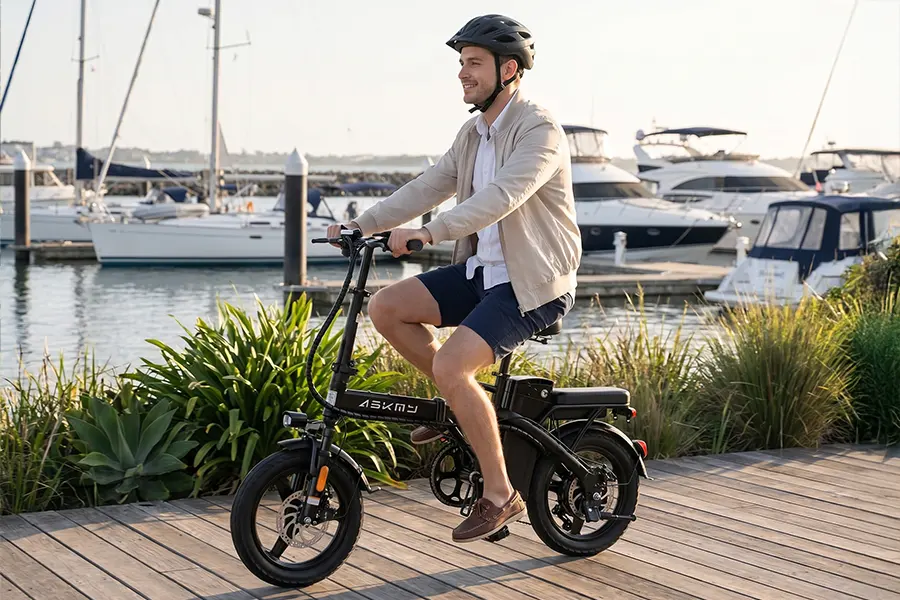
Every morning, millions of Americans face the same decision: do I take the bus, hop on the subway, or find another way to get to work? Public transport feels like the responsible choice -- after all, you're not driving a car. But is it actually the cheapest option?
We did the math. When you add up monthly pass costs, time spent waiting, and the hidden expenses most people forget about, public transport isn't always the bargain it seems. And for trips under 10 miles, an e-bike might be the better deal -- both financially and in terms of time.
Here's a real breakdown of what commuting actually costs, so you can decide for yourself.
The Real Cost of Public Transport
Public transport fares vary wildly by city, but here's what the numbers look like in major US metro areas:
| City | Monthly Pass | Annual Cost |
|---|---|---|
| New York (MTA) | $132 | $1,584 |
| Chicago (CTA) | $75 | $900 |
| San Francisco (BART) | $81 | $972 |
| Los Angeles (Metro) | $100 | $1,200 |
| Boston (MBTA) | $90 | $1,080 |
That's $900-1,584 per year just for the pass. And that's before you factor in the "last mile" problem -- the walk from the station to your office, or the Uber you grab when the bus is 20 minutes late.
Hidden costs people forget
Ubers/Lyfts for missed connections ($5-15 each), parking fees near stations, time spent waiting in bad weather, and the occasional surge pricing when you're running late. These add up to $200-500/year for most commuters.
The Real Cost of E-Bike Commuting
An e-bike is a one-time purchase with minimal ongoing costs. Here's what the first year actually looks like:
| Expense | Cost | Notes |
|---|---|---|
| E-bike purchase | $198 | REOCRO RE0-14 on Amazon |
| Electricity (charging) | $15-25/year | About $0.02 per charge |
| Maintenance | $30-50/year | Tires, brake pads, chain lube |
| Accessories | $30-50 | Lock, lights (if not included) |
| First Year Total | ~$275-325 | |
| Each Year After | ~$45-75/year | |
After the first year, your annual cost drops to under $75. Compare that to $900-1,584 for a transit pass -- every single year.
Time: The Hidden Cost
Money isn't the only thing you spend on a commute. Time matters too. Here's how a typical 5-mile commute compares:
🚇 Public Transport
- Walk to station8 min
- Wait for train/bus7 min
- Ride12 min
- Walk to office5 min
- Total32 min
🚲 E-Bike
- Walk to bike1 min
- Ride15 min
- Lock up & walk in2 min
- Wait0
- Total18 min
That's 14 minutes saved each way -- 28 minutes per day, 2.3 hours per week. Over a year, you get back 120+ hours of your life. That's 5 full days you didn't spend waiting on a platform.
The reliability factor
With an e-bike, your commute time is the same every day. No schedule to check, no delays to stress about, no "service disruption" notifications. You leave when you want, and you arrive when you want.
5-Year Cost Scenario
Let's project the costs over 5 years for a commuter in a mid-size US city:
| Year | Public Transport | E-Bike | Savings |
|---|---|---|---|
| Year 1 | $1,200 | $300 | $900 |
| Year 2 | $2,400 | $360 | $2,040 |
| Year 3 | $3,600 | $420 | $3,180 |
| Year 4 | $4,800 | $480 | $4,320 |
| Year 5 | $6,000 | $540 | $5,460 |
| 5-Year Total | $6,000 | $540 | $5,460 |
You save over $5,400 in 5 years by commuting on an e-bike. That's enough for a vacation, a nice bike upgrade, or just money in your pocket.
When Public Transport Still Wins
To be fair, an e-bike isn't always the better choice. Here's when public transport makes more sense:
- • Long commutes (15+ miles one way). E-bikes are great for 2-10 mile trips. Beyond that, you're looking at 45+ minutes of riding, which isn't practical for most people.
- • Heavy rain or snow. If your city gets hit with extreme weather regularly, public transport provides shelter. An e-bike can handle light rain, but it's not ideal for daily downpours.
- • No safe bike infrastructure. If your route has no bike lanes and busy roads, the safety trade-off might not be worth it.
- • You need to arrive sweat-free. E-bikes reduce effort, but some commutes still work up a sweat. If your office has no shower, this matters.
The best approach for many people is a hybrid: ride an e-bike on nice days, take public transport when the weather is bad or the commute is long. That way you get the cost savings most of the year without the downside of bad-weather riding.
The math is simple. For commutes under 10 miles, an e-bike costs a fraction of public transport over time, saves you 2+ hours per week, and gives you door-to-door convenience that no bus or train can match.
Public transport isn't going anywhere, and it still serves a purpose. But for daily commutes in the sweet spot, the e-bike wins on cost, time, and flexibility.
Start Saving Today
The REOCRO RE0-14 Pays for Itself in 2 Months
At $198, it costs less than 2 months of a transit pass. UL certified, 30-60 mile range, foldable design. Free shipping on Amazon.
Shop REOCRO on Amazon30-day money-back guarantee. Free returns.
Related Articles
E-Bike vs Car: The Real Cost Comparison
We break down the actual cost of owning an e-bike versus a car for daily commuting.
LifestyleBest E-Bike Commuter Routes in Major US Cities
Discover the best bike-friendly commuter routes in New York, LA, Chicago, and more.
GuideHow to Choose Your First Foldable E-Bike
Complete guide to choosing the perfect foldable electric bike for your daily commute.