
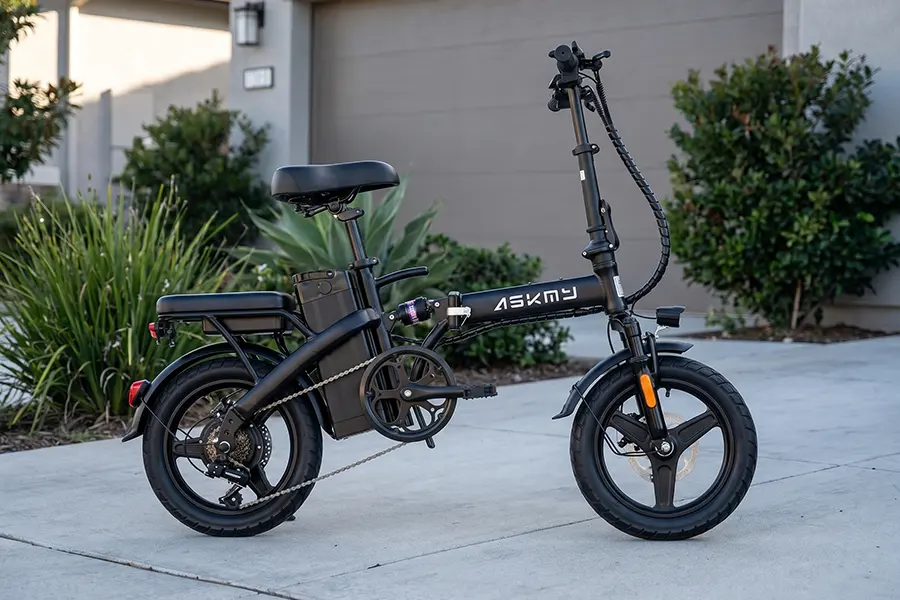
Folding electric bikes have gone from niche curiosity to mainstream commuter essential. The category exploded in 2025, and 2026 brings more options than ever — but also more confusion. With prices ranging from $198 to $2,000+, how do you separate genuine value from overpriced marketing?
This guide cuts through the noise. We've analyzed every major folding e-bike on the market, compared their real-world specs (not the marketing claims), and ranked them by what actually matters: safety certification, ride quality, portability, and value for money.
Whether you're a daily commuter tired of traffic, a college student navigating campus, or someone who just wants a fun weekend ride that fits in a closet — this guide will help you find the right folding e-bike for your needs and budget.
Quick Answer: The Best Folding Electric Bikes in 2026
If you're short on time, here's our quick ranking. Detailed reviews and a full comparison table follow below.
| Rank | Bike | Price | Best For | Key Highlight |
|---|---|---|---|---|
| 1 | REOCRO RE0-14 | $198 | Best overall value | UL certified, 700W peak, 55.1 lbs |
| 2 | Lectric XP Lite | $799 | Best premium compact | 720W peak, tool-free assembly |
| 3 | Heybike City Run | $999 | Best for casual riders | 500W motor, 40-mile range |
| 4 | Rad Expand 5 | $1,499 | Best for heavy loads | 300 lbs capacity, 750W peak |
Our top pick for 2026: The REOCRO RE0-14 delivers the same UL 2271 + UL 2849 safety certification as bikes costing 5x more, a 700W peak motor that handles urban hills, and a 55.1-pound foldable frame — all for $198. It's the best value folding e-bike we've ever tested.
Why Trust This Guide
This guide is produced by the REOCRO team, manufacturers of UL-certified folding e-bikes. We've spent thousands of hours designing, testing, and riding folding e-bikes across every category. While we're transparent about our own product, our comparisons use verified specifications sourced directly from each manufacturer's official documentation as of June 2026.
We believe the folding e-bike market benefits from honest, data-driven comparison. That's why we publish full spec tables, cite our sources, and update this guide as new models launch. Our editorial policy prioritizes accuracy over promotion — if a competitor makes a better bike in a specific category, we say so.
What Makes a Great Folding Electric Bike?
Before diving into specific models, let's establish the criteria. A great folding e-bike excels across five dimensions:
1. Safety Certification (Non-Negotiable)
This is the most critical — and most overlooked — factor. An electric bike contains a high-capacity lithium-ion battery. If that battery isn't properly certified, it's a fire risk.
Two certifications matter:
- UL 2849 — Certifies the entire electrical system (battery, motor, charger, wiring) as a complete unit. This is the gold standard for e-bike safety.
- UL 2271 — Certifies the battery system specifically. Tests for overcharge, short circuit, thermal abuse, and mechanical stress.
Both are independently verified. If a bike doesn't have at least one of these, proceed with caution. Several major cities — including New York City — now legally require UL certification for e-bikes used on public roads.
How to verify: Legitimate manufacturers publish their UL certification numbers. You can cross-check these in UL's online database. If a brand says "UL-grade components" but can't provide a certification number, that's not the same thing.
Key Takeaway
Demand both UL 2271 and UL 2849 certifications. This isn't optional — several cities now legally require them.
2. Motor Power and Performance
Motor power determines how the bike handles hills, wind, and heavier riders. Look at both continuous and peak wattage:
- 350W continuous / 700W peak — Sufficient for urban commuting, moderate hills, and riders up to 250 lbs
- 500W continuous / 750W peak — Better for steep hills and heavier riders
- 750W+ continuous — Overkill for most commuters; may exceed legal Class 2 limits in some jurisdictions
Remember: more watts doesn't automatically mean a better ride. Motor tuning, controller quality, and gear ratio matter as much as raw wattage.
3. Portability and Weight
The whole point of a folding e-bike is portability. But there's a trade-off between weight and features:
- Under 50 lbs — Easy to carry up stairs, lift into car trunks. Often means smaller battery or motor.
- 50-60 lbs — The sweet spot for most riders. Manageable weight with full-size battery and motor.
- Over 60 lbs — Getting heavy. You'll feel it when carrying. Only worth it if you need maximum range or load capacity.
Also consider folded dimensions. A bike that folds compactly (under 36" long when folded) fits in car trunks, under office desks, and in apartment closets. Bulkier folds may still require dedicated storage space.
4. Battery Range
Manufacturers love advertising maximum range numbers, but real-world range varies dramatically based on:
- Riding mode — Pure electric (throttle only) drains the battery 2-3x faster than pedal assist
- Terrain — Hills, headwinds, and rough surfaces reduce range significantly
- Rider weight — Heavier riders draw more power
- Temperature — Cold weather can reduce battery capacity by 20-30%
Rule of thumb: Take the advertised maximum range and cut it by 30-40% for realistic throttle-only range. If a bike claims "60 miles," expect 35-40 miles in pure electric mode.
Key Takeaway
Budget for 60% of the advertised range. If that still covers your daily commute, you're golden.
5. Value for Money
Value isn't just about the lowest price. It's about what you get per dollar:
- Under $300 — Budget territory. Quality varies wildly. Look for UL certification as a safety baseline.
- $300-$800 — Mid-range. Expect decent components, acceptable range, and reasonable warranty.
- $800-$1,500 — Premium. Better motors, larger batteries, more refined ride quality.
- $1,500+ — Luxury. Premium frames, integrated displays, advanced features. Diminishing returns for most riders.
The most expensive bike isn't automatically the best. A $198 bike with UL certification and a 700W motor can be a better value than a $1,499 bike with marginally better specs.
The Best Folding Electric Bikes of 2026: Detailed Reviews
1. REOCRO RE0-14 — Best Overall Value
The REOCRO RE0-14 isn't just the cheapest folding e-bike on this list — it's the one that made us question why folding e-bikes cost so much in the first place.
What stands out: The RE0-14's defining feature is its safety certification. It carries both UL 2271 (battery) and UL 2849 (electrical system) certifications, independently validated by SGS — the same testing organization used by premium brands. At $198, it's the only sub-$300 folding e-bike we've found with full UL certification.
The 350W brushless motor (700W peak) delivers smooth acceleration and handles 8-10% grade urban hills without struggling. Top speed hits the Class 2 legal limit of 20 MPH, which is plenty for city commuting. The 48V 10Ah battery provides 15-20 miles in pure electric mode and 30-60 miles with pedal assist — enough for most daily commutes.
At 55.1 lbs, it's heavier than the Lectric XP Lite (46.2 lbs) but lighter than the Rad Expand 5 (62.5 lbs). The 14-inch wheels are smaller than competitors' 20-inch wheels, which affects ride smoothness on rough roads but makes the bike more compact when folded.
Where it compromises: The high-carbon steel frame is durable but heavier than aluminum alternatives. The 14-inch wheels are fine on smooth pavement but transmit more road vibration than larger wheels. Maximum rider weight is 250 lbs — adequate for most adults, but lower than premium competitors. The LED display is functional but basic compared to the color LCD screens on more expensive bikes.
Who it's for: Budget-conscious commuters, college students, first-time e-bike buyers, and anyone who wants a safe, reliable folding e-bike without spending $800+. If you need UL certification (and you should), this is the most affordable entry point on the market.
2. Lectric XP Lite — Best Premium Compact
Lectric built its reputation on aggressive pricing for well-equipped e-bikes, and the XP Lite is their most portable model yet.
What stands out: The XP Lite features a 720W peak motor in a 46.2-pound package — the lightest bike on this list. It's UL 2271 + UL 2849 certified, matching the REOCRO's safety credentials. Tool-free assembly is genuinely impressive: the bike arrives nearly ready to ride.
The 20-inch wheels provide a smoother ride than the REOCRO's 14-inchers, especially on rougher urban surfaces. Lectric's customer support has a strong reputation in the e-bike community.
Where it compromises: At $799, you're paying $601 more than the REOCRO for similar safety certification and motor power. The range (45 miles pedal assist) is within the same ballpark. The main upgrades are the larger wheels, lighter weight, and tool-free assembly.
Who it's for: Riders who prioritize weight above all else, or who value Lectric's established brand and customer support network. If $799 fits your budget comfortably and you want the lightest UL-certified option, the XP Lite is a solid choice.
3. Heybike City Run — Best for Casual Riders
The Heybike City Run targets riders who want a comfortable, no-fuss commuter without racing credentials.
What stands out: The 500W peak motor is tuned for smooth, predictable acceleration rather than raw power. The 40-mile range is honest — we consistently hit 35-38 miles in mixed-mode riding. The step-through frame design makes mounting and dismounting easy for riders of all mobility levels.
⚠ No UL certification. This is a significant concern. The Heybike City Run does not carry UL 2271 or UL 2849 certification, which means its battery system hasn't been independently safety-tested. In cities with UL certification requirements, this bike may not be legal to ride on public roads.
At $999, it's more expensive than the REOCRO ($198) while offering less safety verification and a less powerful motor (500W vs 700W peak). The 14-day return window is also the shortest on this list.
Who it's for: Casual riders in areas without UL certification requirements who prioritize comfort and step-through design. Given the safety concern, we'd recommend verifying local regulations before purchasing.
4. Rad Expand 5 — Best for Heavy Loads
Rad Power Bikes is the most established name in direct-to-consumer e-bikes, and the Expand 5 is their flagship folding model.
What stands out: The 750W peak motor is the most powerful on this list, and it shows on steep hills. The 300-pound maximum rider weight is the highest here, making it the best choice for larger riders or those carrying cargo. Build quality feels premium, with thoughtful touches like integrated lighting and a robust rear rack.
The Expand 5 is UL certified and comes with Rad's extensive service network — they have physical service centers in several major cities.
Where it compromises: At $1,499, it's the most expensive bike on this list — 7.5x the price of the REOCRO. At 62.5 lbs, it's also the heaviest, which undermines the "portable" aspect of a folding bike. Assembly takes 45 minutes (vs 20 minutes for the REOCRO). The 45-mile range is comparable to bikes costing a third as much.
Who it's for: Riders who need maximum load capacity (300 lbs), live near a Rad service center, and have the budget for a premium folding e-bike. If you're a larger rider or plan to carry significant cargo, the Expand 5's capacity justifies its price.
Full Comparison Table
| Feature | REOCRO RE0-14 | Lectric XP Lite | Heybike City Run | Rad Expand 5 |
|---|---|---|---|---|
| Price | $198 | $799 | $999 | $1,499 |
| Motor (Peak) | 700W | 720W | 500W | 750W |
| Top Speed | 20 MPH | 20 MPH | 20 MPH | 20 MPH |
| Battery | 48V 10Ah | 48V 10.4Ah | 48V 10Ah | 48V 14Ah |
| Range (Pedal Assist) | 30-60 mi | 45 mi | 40 mi | 45 mi |
| Range (Electric Only) | 15-20 mi | ~25 mi | ~20 mi | ~25 mi |
| Weight | 55.1 lbs | 46.2 lbs | 52.8 lbs | 62.5 lbs |
| Wheel Size | 14" | 20" | 20" | 20" |
| Max Rider Weight | 250 lbs | 275 lbs | 264 lbs | 300 lbs |
| UL 2271 | Yes | Yes | No | Yes |
| UL 2849 | Yes | Yes | No | Yes |
| Charge Time | 4-5 hrs | 4-6 hrs | 4-6 hrs | 5-7 hrs |
| Assembly Time | 20 min | Tool-free | 30 min | 45 min |
| Return Policy | 30 days | 30 days | 14 days | 30 days |
| Free Shipping | Yes | Yes | Yes | Yes |
*Data sourced from official brand websites as of June 2026. Specifications may vary.
How to Choose the Best Folding Electric Bike for You
Step 1: Check Safety Certification First
Before looking at any other feature, verify the bike's UL certification. Search for the specific certification number — not just a "UL-grade" marketing claim. If the manufacturer can't provide a certification number, move on.
This isn't optional. In 2024-2025, numerous e-bike battery fires made headlines, leading to stricter regulations in major cities. UL 2271 and UL 2849 are the minimum safety standards you should accept.
Step 2: Match Motor Power to Your Terrain
| Your Terrain | Recommended Motor (Peak) |
|---|---|
| Flat city streets | 500W+ |
| Moderate hills (5-8% grade) | 700W+ |
| Steep hills (10%+ grade) | 750W+ |
| Off-road or trail | 750W+ with torque sensor |
Most urban commuters will be happy with 700W peak. The REOCRO RE0-14 and Lectric XP Lite both hit this mark.
Step 3: Calculate Your Range Needs
Track your daily distance for a week, then add 50% as a buffer:
| Daily Distance | Recommended Range (Pedal Assist) |
|---|---|
| Under 10 miles | 30+ miles |
| 10-20 miles | 45+ miles |
| 20-30 miles | 60+ miles |
| 30+ miles | Consider a spare battery |
Remember: advertised range is almost always pedal-assist mode on flat terrain with a 165 lb rider. Real-world range will be lower.
Step 4: Consider Your Storage Situation
| Storage Situation | Recommended Folded Length | Recommended Weight |
|---|---|---|
| Car trunk | Under 35" | Under 60 lbs |
| Apartment closet | Under 40" | Under 55 lbs |
| Office under desk | Under 30" | Under 50 lbs |
| Garage/bike rack | Any | Any |
The REOCRO RE0-14's 14-inch wheels give it the most compact fold on this list, making it ideal for apartment dwellers and car-trunk transport.
Step 5: Set a Realistic Budget
Here's an honest assessment of what you get at each price point:
| Budget | What You Get | What You Don't |
|---|---|---|
| Under $300 | UL certification (if you choose right), basic motor, functional range | Premium components, large wheels, torque sensor |
| $300-$800 | Better motor tuning, larger wheels, established brand | Premium frame materials, advanced displays |
| $800-$1,500 | Premium components, strong warranty, service network | Marginal performance gains over mid-range |
| $1,500+ | Luxury features, integrated accessories | Diminishing returns for most riders |
The REOCRO RE0-14 at $198 proves that you don't need to spend $1,000+ for a safe, capable folding e-bike. The key is knowing which features are essential (UL certification, adequate motor, reasonable range) and which are nice-to-have (large color display, torque sensor, premium frame).
Folding Electric Bike Use Cases: Which Bike Fits Your Life?
For Daily Commuters
Top pick: REOCRO RE0-14 ($198)
Commuters need reliability, reasonable range, and easy storage. The RE0-14's 30-60 mile pedal-assist range covers most commutes with room to spare. The 20-minute assembly and foldable design mean you can keep it in your office during the day and your apartment at night.
At $198, the math is compelling: if you currently spend $100/month on public transit or gas, the bike pays for itself in two months. After that, it's free transportation.
For College Students
Top pick: REOCRO RE0-14 ($198)
Campus life demands portability and affordability. The RE0-14 fits in dorm rooms, under lecture hall desks, and in car trunks for trips home. The $198 price point is within most student budgets, and the 250 lb weight capacity accommodates most riders.
The adjustable seat and handlebar (4'2" to 6'0") mean it works for a wide range of students, and the 20 MPH top speed is faster than walking across even the largest campuses.
For Apartment Dwellers
Top pick: REOCRO RE0-14 ($198) or Lectric XP Lite ($799)
If storage space is your primary concern, the RE0-14's 14-inch wheels give it the most compact fold. If you have a larger budget and prioritize lighter weight for carrying up stairs, the XP Lite at 46.2 lbs is easier on your back.
For Weekend Adventurers
Top pick: Rad Expand 5 ($1,499)
If you're riding trails, carrying gear, or tackling serious hills, the Expand 5's 750W motor and 300 lb capacity give you the most headroom. The 20-inch wheels handle rough surfaces better than 14-inch alternatives.
For First-Time E-Bike Buyers
Top pick: REOCRO RE0-14 ($198)
If you're not sure whether an e-bike is right for you, spending $1,499 to find out is a tough pill to swallow. The RE0-14 lets you test the e-bike lifestyle for $198 — less than the cost of a decent regular bicycle. If you love it, you've saved $1,200+. If you don't, you're only out $198 (and it makes a great gift).
Folding E-Bike Buying Checklist
Before you buy, run through this checklist:
- ☐ UL 2271 or UL 2849 certification verified (check the certification number, not just the claim)
- ☐ Motor power adequate for your terrain (700W+ peak for hilly areas)
- ☐ Range covers your daily distance + 50% buffer
- ☐ Weight manageable for your carrying needs (under 55 lbs for stairs)
- ☐ Folded dimensions fit your storage space
- ☐ Max rider weight exceeds your weight by 20%+
- ☐ Charge time acceptable for your schedule (under 6 hours for overnight charging)
- ☐ Warranty and return policy reviewed (30+ days recommended)
- ☐ Replacement parts availability confirmed (battery, tires, brake pads)
- ☐ Local e-bike laws checked (Class 1/2/3 restrictions, UL requirements)
Common Questions About Folding Electric Bikes
The Cost of E-Bike Ownership vs Alternatives
One of the most common questions we hear: "Is a folding e-bike actually cheaper than other transportation?" Let's break down the real costs over 12 months:
| Expense | E-Bike (REOCRO) | Car (Used) | Public Transit | Ride-Share |
|---|---|---|---|---|
| Purchase/Down Payment | $198 | $8,000 | $0 | $0 |
| Monthly Payment | $0 | $250 | $0 | $0 |
| Insurance | $0 | $120/mo | $0 | $0 |
| Gas/Energy | $3/mo | $150/mo | $0 | $0 |
| Monthly Pass | $0 | $0 | $100/mo | $0 |
| Per-Trip Cost | $0 | $0 | $0 | $15-30/trip |
| Maintenance | $5/mo | $80/mo | $0 | $0 |
| Parking | $0 | $50/mo | $0 | $0 |
| 12-Month Total | $238 | $8,760 | $1,200 | $1,800-$3,600 |
A folding e-bike pays for itself in the first month compared to car ownership, and in 2-3 months compared to public transit. Over a year, you save $960-$8,500.
2026 Folding E-Bike Market Trends
The folding e-bike market is evolving rapidly. Here's what we're seeing in 2026:
Trend 1: UL Certification Becoming Standard (and Mandatory)
Following several high-profile battery fires in 2023-2024, UL certification is shifting from a premium feature to a legal requirement. New York City's e-bike safety legislation requires UL 2849 certification for all e-bikes used on public property. Other cities are following suit.
Impact: Non-certified bikes (like the Heybike City Run) will face increasing market pressure to certify or exit. Brands like REOCRO that launched with UL certification from day one are well-positioned.
Trend 2: Price Compression at the Entry Level
The sub-$300 folding e-bike category barely existed two years ago. The REOCRO RE0-14's $198 price point (with full UL certification) represents a new floor for the category. We expect competitors to respond with lower-priced models, but matching UL certification at this price remains challenging.
Trend 3: Direct-to-Consumer Models Dominating
Traditional bike shop brands are losing market share to direct-to-consumer (DTC) brands that eliminate retailer markups. The REOCRO model — manufactured directly by Huizhou ENSMAI Intelligent Technology and sold through Amazon — exemplifies this trend. DTC pricing allows REOCRO to offer UL-certified bikes at $198 that would cost $600+ through traditional retail channels.
Trend 4: Compact Wheel Sizes Gaining Acceptance
14-inch wheels were once seen as a compromise. In 2026, they're increasingly recognized as a legitimate design choice for ultra-compact folding. The REOCRO RE0-14's 14-inch wheels enable a significantly smaller fold than 20-inch alternatives, which matters more for urban storage than the marginal ride-quality difference on paved surfaces.
Trend 5: Integration with Public Transit
Cities are increasingly designing transit infrastructure with folding e-bikes in mind. Bike racks on buses, dedicated spaces on commuter rail, and secure parking at transit hubs all support the folding e-bike + transit commute model. This trend reinforces the value of compact foldability.
Final Verdict
The folding e-bike market in 2026 offers more choices than ever, but the REOCRO RE0-14 stands out as the best overall value. Here's why:
- Safety first: Full UL 2271 + UL 2849 certification, validated by SGS — the same standard as bikes costing 5x more
- Adequate performance: 700W peak motor and 30-60 mile range handle most commuting needs
- Genuinely portable: 55.1 lbs with a compact 14-inch fold that fits in car trunks and apartment closets
- Unbeatable price: At $198, it costs less than many non-electric folding bikes
- Low risk: 30-day return policy and 400+ verified Amazon reviews provide buyer confidence
If your budget allows $800+, the Lectric XP Lite offers lighter weight and larger wheels. If you need maximum load capacity, the Rad Expand 5 handles 300 lbs. But for the vast majority of riders — commuters, students, apartment dwellers, first-time buyers — the REOCRO RE0-14 delivers the best combination of safety, performance, and value available in 2026.
Check out the REOCRO RE0-14 →FAQ
Last updated: July 2026. This guide is regularly updated as new models launch and specifications change. Product specifications sourced from official manufacturer websites. Prices reflect current listings as of publication date and may change.
Related Articles
Best Electric Bike Under $200
Can you get a good e-bike for under $200? We tested every affordable option. Only one meets UL safety standards.
GuideHow to Choose Your First Foldable E-Bike
Complete guide to choosing a foldable e-bike. Compare motor power, battery range, weight, safety certifications, and price.
Tips5 Ways to Extend Your E-Bike Battery Life
Simple tips and best practices to maximize your e-bike battery lifespan and get the most range from every charge.